 |
PlantRegMap/PlantTFDB v5.0
Plant Transcription
Factor Database
|
| Home TFext BLAST Prediction Download Help About Links PlantRegMap |
Transcription Factor Information
| Basic Information? help Back to Top | |||||||||
|---|---|---|---|---|---|---|---|---|---|
| TF ID | MELO3C007657P1 | ||||||||
| Organism | |||||||||
| Taxonomic ID | |||||||||
| Taxonomic Lineage |
cellular organisms; Eukaryota; Viridiplantae; Streptophyta; Streptophytina; Embryophyta; Tracheophyta; Euphyllophyta; Spermatophyta; Magnoliophyta; Mesangiospermae; eudicotyledons; Gunneridae; Pentapetalae; rosids; fabids; Cucurbitales; Cucurbitaceae; Benincaseae; Cucumis
|
||||||||
| Family | AP2 | ||||||||
| Protein Properties | Length: 636aa MW: 70115 Da PI: 7.7877 | ||||||||
| Description | AP2 family protein | ||||||||
| Gene Model |
|
||||||||
| Signature Domain? help Back to Top | |||||||
|---|---|---|---|---|---|---|---|
| No. | Domain | Score | E-value | Start | End | HMM Start | HMM End |
| 1 | AP2 | 51 | 3.6e-16 | 290 | 349 | 1 | 55 |
             AP2   1 sgykGVrwdkkrgrWvAeIrd.pse.ng..kr.krfslgkfgtaeeAakaaiaarkkleg 55
                     s+y+GV++++++gr++A+++d  ++  g  ++ ++++lg ++ +e+Aa+a++ a++k++g
  MELO3C007657P1 290 SQYRGVTRHRWTGRYEAHLWDnSCKkEGqsRKgRQVYLGGYDMEEKAARAYDLAALKYWG 349
                     78*******************988886678446*************************98 PP
| |||||||
| 2 | AP2 | 32.6 | 2e-10 | 409 | 452 | 9 | 55 |
             AP2   9 dkkrgrWvAeIrdpsengkrkrfslgkfgtaeeAakaaiaarkkleg 55
                     +++ grW A+I  +     +k  +lg+f t eeAa+a++ a+ k++g
  MELO3C007657P1 409 HHQHGRWQARIGRVAG---NKDLYLGTFSTQEEAAEAYDIAAIKFRG 452
                     456777****988532...5************************998 PP
| |||||||
| Protein Features ? help Back to Top | ||||||
|---|---|---|---|---|---|---|
| Database | Entry ID | E-value | Start | End | InterPro ID | Description |
| CDD | cd00018 | 6.20E-22 | 290 | 357 | No hit | No description |
| Pfam | PF00847 | 6.2E-13 | 290 | 349 | IPR001471 | AP2/ERF domain |
| SuperFamily | SSF54171 | 1.05E-16 | 290 | 359 | IPR016177 | DNA-binding domain |
| PROSITE profile | PS51032 | 19.203 | 291 | 357 | IPR001471 | AP2/ERF domain |
| SMART | SM00380 | 2.6E-29 | 291 | 363 | IPR001471 | AP2/ERF domain |
| Gene3D | G3DSA:3.30.730.10 | 4.2E-16 | 291 | 358 | IPR001471 | AP2/ERF domain |
| PRINTS | PR00367 | 6.9E-5 | 292 | 303 | IPR001471 | AP2/ERF domain |
| PRINTS | PR00367 | 6.9E-5 | 339 | 359 | IPR001471 | AP2/ERF domain |
| CDD | cd00018 | 6.43E-23 | 392 | 462 | No hit | No description |
| SMART | SM00380 | 1.3E-28 | 393 | 466 | IPR001471 | AP2/ERF domain |
| PROSITE profile | PS51032 | 17.912 | 393 | 460 | IPR001471 | AP2/ERF domain |
| SuperFamily | SSF54171 | 2.68E-14 | 409 | 461 | IPR016177 | DNA-binding domain |
| Pfam | PF00847 | 2.1E-5 | 409 | 452 | IPR001471 | AP2/ERF domain |
| Gene3D | G3DSA:3.30.730.10 | 9.9E-15 | 410 | 460 | IPR001471 | AP2/ERF domain |
| Gene Ontology ? help Back to Top | ||||||
|---|---|---|---|---|---|---|
| GO Term | GO Category | GO Description | ||||
| GO:0006355 | Biological Process | regulation of transcription, DNA-templated | ||||
| GO:0007276 | Biological Process | gamete generation | ||||
| GO:0010492 | Biological Process | maintenance of shoot apical meristem identity | ||||
| GO:0042127 | Biological Process | regulation of cell proliferation | ||||
| GO:0005634 | Cellular Component | nucleus | ||||
| GO:0003677 | Molecular Function | DNA binding | ||||
| GO:0003700 | Molecular Function | transcription factor activity, sequence-specific DNA binding | ||||
| Sequence ? help Back to Top |
|---|
| Protein Sequence Length: 636 aa Download sequence Send to blast |
MNNVNGNNCN WLGFSVSPNV NMELSSSAAT SVSPSIPANL FHSPSQFNYG ICYGVDGEHG 60 GFYSPLSAMP LKSDGSICSM EALSRQHPQV VSSTTPKLED FFGGATMGSH HYESNDREAM 120 ALSLDSIFCH QNPTHEPNNQ SFAHFSSLRS RELMLQDSKV ILPDGCNLQQ QQHPAVAQSD 180 ISGMKNWAVP RNYAATNNGS FEQKMVSCMS ENGGESGSIN AMAYGDLQSL SLSMTMSPSS 240 QSSCVTATQH VSPAMTDCSA MDTKKRGHEK VDQKQIVHRK SLDTFGQRTS QYRGVTRHRW 300 TGRYEAHLWD NSCKKEGQSR KGRQVYLGGY DMEEKAARAY DLAALKYWGP STHINFPLEN 360 YQKELEEMKN MSRQEYVAHL RRRSSGFSRG ASIYRGVTRS NKSQLKALHH QHGRWQARIG 420 RVAGNKDLYL GTFSTQEEAA EAYDIAAIKF RGMNAVTNFD ITRYDVERII ASSTLLSGDL 480 AKRKPEFDNE SLRQSPSTHN SNSEAMPLPS QSSSQSESDW KMALYQSSQQ LIPKPRMLSA 540 INDDGSQLGV EDSARMGAHF SNASSMVTSC SLSSSREESP DKTSLSMVFG MPQSTSKPFA 600 TSANNMNTSW IASAQQIRAA NCMSQLPVFA AWTDT* |
| Functional Description ? help Back to Top | ||||||
|---|---|---|---|---|---|---|
| Source | Description | |||||
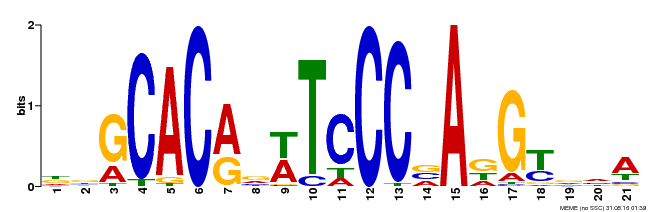
| UniProt | Transcription activator that recognizes and binds to the DNA consensus sequence 5'-CAC[AG]N[AT]TNCCNANG-3'. Required for the initiation and growth of ovules integumenta, and for the development of female gametophyte. Plays a critical role in the development of gynoecium marginal tissues (e.g. stigma, style and septa), and in the fusion of carpels and of medial ridges leading to ovule primordia. Also involved in organs initiation and development, including floral organs. Maintains the meristematic competence of cells and consequently sustains expression of cell cycle regulators during organogenesis, thus controlling the final size of each organ by controlling their cell number. Regulates INO autoinduction and expression pattern. As ANT promotes petal cell identity and mediates down-regulation of AG in flower whorl 2, it functions as a class A homeotic gene. {ECO:0000269|PubMed:10528263, ECO:0000269|PubMed:10639184, ECO:0000269|PubMed:10948255, ECO:0000269|PubMed:11041883, ECO:0000269|PubMed:12183381, ECO:0000269|PubMed:12271029, ECO:0000269|PubMed:12655002, ECO:0000269|PubMed:8742706, ECO:0000269|PubMed:8742707, ECO:0000269|PubMed:9001406, ECO:0000269|PubMed:9093862, ECO:0000269|PubMed:9118807}. | |||||
| Binding Motif ? help Back to Top | |||
|---|---|---|---|
| Motif ID | Method | Source | Motif file |
| MP00088 | SELEX | Transfer from AT4G37750 | Download |
| |||
| Regulation -- PlantRegMap ? help Back to Top | ||||||
|---|---|---|---|---|---|---|
| Source | Upstream Regulator | Target Gene | ||||
| PlantRegMap | Retrieve | Retrieve | ||||
| Annotation -- Nucleotide ? help Back to Top | ||||||
|---|---|---|---|---|---|---|
| Source | Hit ID | E-value | Description | |||
| GenBank | LN681875 | 0.0 | LN681875.1 Cucumis melo genomic scaffold, anchoredscaffold00007. | |||
| GenBank | LN713262 | 0.0 | LN713262.1 Cucumis melo genomic chromosome, chr_8. | |||
| Annotation -- Protein ? help Back to Top | |||||||
|---|---|---|---|---|---|---|---|
| Source | Hit ID | E-value | Description | ||||
| Refseq | XP_008440434.1 | 0.0 | PREDICTED: AP2-like ethylene-responsive transcription factor ANT isoform X1 | ||||
| Swissprot | Q38914 | 1e-169 | ANT_ARATH; AP2-like ethylene-responsive transcription factor ANT | ||||
| TrEMBL | A0A1S3B152 | 0.0 | A0A1S3B152_CUCME; AP2-like ethylene-responsive transcription factor ANT isoform X1 | ||||
| STRING | XP_008440434.1 | 0.0 | (Cucumis melo) | ||||
| Orthologous Group ? help Back to Top | |||
|---|---|---|---|
| Lineage | Orthologous Group ID | Taxa Number | Gene Number |
| Fabids | OGEF916 | 34 | 114 |
| Best hit in Arabidopsis thaliana ? help Back to Top | ||||||
|---|---|---|---|---|---|---|
| Hit ID | E-value | Description | ||||
| AT4G37750.1 | 1e-145 | AP2 family protein | ||||
| ©2010-2022, Center
for Bioinformatics, Peking University Last Modified: 2022-12-08 Questions or Comments, please contact  |
Supported By



|