 |
PlantRegMap/PlantTFDB v5.0
Plant Transcription
Factor Database
|
| Home TFext BLAST Prediction Download Help About Links PlantRegMap |
Transcription Factor Information
| Basic Information? help Back to Top | |||||||||
|---|---|---|---|---|---|---|---|---|---|
| TF ID | OMERI03G37110.1 | ||||||||
| Organism | |||||||||
| Taxonomic ID | |||||||||
| Taxonomic Lineage |
cellular organisms; Eukaryota; Viridiplantae; Streptophyta; Streptophytina; Embryophyta; Tracheophyta; Euphyllophyta; Spermatophyta; Magnoliophyta; Mesangiospermae; Liliopsida; Petrosaviidae; commelinids; Poales; Poaceae; BOP clade; Oryzoideae; Oryzeae; Oryzinae; Oryza
|
||||||||
| Family | C2H2 | ||||||||
| Protein Properties | Length: 390aa MW: 42426.3 Da PI: 6.5006 | ||||||||
| Description | C2H2 family protein | ||||||||
| Gene Model |
|
||||||||
| Signature Domain? help Back to Top | |||||||
|---|---|---|---|---|---|---|---|
| No. | Domain | Score | E-value | Start | End | HMM Start | HMM End |
| 1 | zf-C2H2 | 21.3 | 6.9e-07 | 171 | 192 | 2 | 23 |
                      EETTTTEEESSHHHHHHHHHHT CS
          zf-C2H2   2 kCpdCgksFsrksnLkrHirtH 23
                       C+ Cgk F+r  nL+ H+r H
  OMERI03G37110.1 171 FCGVCGKGFKRDANLRMHMRGH 192
                      6*******************98 PP
| |||||||
| 2 | zf-C2H2 | 11.5 | 0.00094 | 294 | 308 | 6 | 20 |
                      TTEEESSHHHHHHHH CS
          zf-C2H2   6 CgksFsrksnLkrHi 20
                      Cg+sFsrk+ L  H
  OMERI03G37110.1 294 CGTSFSRKDKLFAHV 308
                      **************7 PP
| |||||||
| Protein Features ? help Back to Top | ||||||
|---|---|---|---|---|---|---|
| Database | Entry ID | E-value | Start | End | InterPro ID | Description |
| SuperFamily | SSF57667 | 2.32E-5 | 168 | 195 | No hit | No description |
| SMART | SM00355 | 0.011 | 170 | 192 | IPR015880 | Zinc finger, C2H2-like |
| PROSITE profile | PS50157 | 11.697 | 170 | 197 | IPR007087 | Zinc finger, C2H2 |
| Gene3D | G3DSA:3.30.160.60 | 1.3E-5 | 172 | 196 | IPR013087 | Zinc finger C2H2-type/integrase DNA-binding domain |
| PROSITE pattern | PS00028 | 0 | 172 | 192 | IPR007087 | Zinc finger, C2H2 |
| SMART | SM00355 | 39 | 224 | 257 | IPR015880 | Zinc finger, C2H2-like |
| SMART | SM00355 | 31 | 262 | 284 | IPR015880 | Zinc finger, C2H2-like |
| Gene Ontology ? help Back to Top | ||||||
|---|---|---|---|---|---|---|
| GO Term | GO Category | GO Description | ||||
| GO:0006355 | Biological Process | regulation of transcription, DNA-templated | ||||
| GO:0010044 | Biological Process | response to aluminum ion | ||||
| GO:0010447 | Biological Process | response to acidic pH | ||||
| GO:0005634 | Cellular Component | nucleus | ||||
| GO:0003676 | Molecular Function | nucleic acid binding | ||||
| GO:0003700 | Molecular Function | transcription factor activity, sequence-specific DNA binding | ||||
| GO:0046872 | Molecular Function | metal ion binding | ||||
| Sequence ? help Back to Top |
|---|
| Protein Sequence Length: 390 aa Download sequence Send to blast |
MIMSSSVDHF SNNNNNSNQA MHLEQDEDFS QMIMELCDFD ASSTTQARHG GEAAAAAAGD 60 ARAVLTYLTF LEQKIGHLRG IISSTPNPPP QIVAAELSCI VVQLVSISKN LAAARRGGDD 120 ADADAKPDGS SDADEGADGD GDGDGERAPP RGPYEVVQIE KEEILAPHVH FCGVCGKGFK 180 RDANLRMHMR GHGEEYKSAA ALAKPCGTGA PPSPSRSQAR RRFYSCPYVG CKRNREHKSF 240 QPLKTPTCVK NHYRRSHCDK SFTCRRCNVK RFSVVADLRT HEKHCGRDRW VCSCGTSFSR 300 KDKLFAHVAI FDGHSPALPP EDYDDAAASG QLPHAAGEAV SRTVDTNRFF SDGLMIKGSM 360 DDERGSLSPM GLDYCEFDGI DLFAAAAFDF |
| Functional Description ? help Back to Top | ||||||
|---|---|---|---|---|---|---|
| Source | Description | |||||
| UniProt | Probable transcription factor. Together with STOP2, plays a critical role in tolerance to major stress factors in acid soils such as proton H(+) and aluminum ion Al(3+). Required for the expression of genes in response to acidic stress (e.g. ALMT1 and MATE), and Al-activated citrate exudation. {ECO:0000269|PubMed:17535918, ECO:0000269|PubMed:18826429, ECO:0000269|PubMed:19321711, ECO:0000269|PubMed:23935008}. | |||||
| Binding Motif ? help Back to Top | |||
|---|---|---|---|
| Motif ID | Method | Source | Motif file |
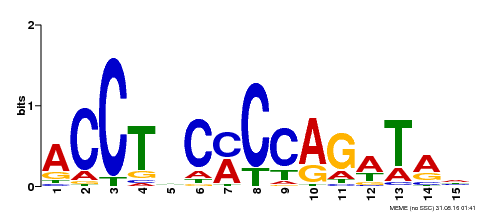
| MP00196 | ampDAP | Transfer from AT1G34370 | Download |
| |||
| Regulation -- Description ? help Back to Top | ||||||
|---|---|---|---|---|---|---|
| Source | Description | |||||
| UniProt | INDUCTION: By shock H(+) and Al(3+) treatments. {ECO:0000269|PubMed:17535918}. | |||||
| Regulation -- PlantRegMap ? help Back to Top | ||||||
|---|---|---|---|---|---|---|
| Source | Upstream Regulator | Target Gene | ||||
| PlantRegMap | Retrieve | Retrieve | ||||
| Annotation -- Nucleotide ? help Back to Top | ||||||
|---|---|---|---|---|---|---|
| Source | Hit ID | E-value | Description | |||
| GenBank | CP012611 | 0.0 | CP012611.1 Oryza sativa Indica Group cultivar RP Bio-226 chromosome 3 sequence. | |||
| Annotation -- Protein ? help Back to Top | |||||||
|---|---|---|---|---|---|---|---|
| Source | Hit ID | E-value | Description | ||||
| Refseq | XP_015630047.1 | 0.0 | zinc finger protein STOP1 homolog | ||||
| Swissprot | Q9C8N5 | 1e-100 | STOP1_ARATH; Protein SENSITIVE TO PROTON RHIZOTOXICITY 1 | ||||
| TrEMBL | A0A0E0D9B4 | 0.0 | A0A0E0D9B4_9ORYZ; Uncharacterized protein | ||||
| STRING | ORUFI03G42070.1 | 0.0 | (Oryza rufipogon) | ||||
| Orthologous Group ? help Back to Top | |||
|---|---|---|---|
| Lineage | Orthologous Group ID | Taxa Number | Gene Number |
| Monocots | OGMP1512 | 38 | 111 |
| Best hit in Arabidopsis thaliana ? help Back to Top | ||||||
|---|---|---|---|---|---|---|
| Hit ID | E-value | Description | ||||
| AT1G34370.3 | 2e-92 | C2H2 family protein | ||||
| ©2010-2022, Center
for Bioinformatics, Peking University Last Modified: 2022-12-08 Questions or Comments, please contact  |
Supported By



|