 |
Plant Transcription
Factor Database
|
Transcription Factor Information
|
Basic
Information? help
Back to Top |
| TF ID |
orange1.1g019213m |
| Common Name | CISIN_1g019213mg |
| Organism |
|
| Taxonomic ID |
|
| Taxonomic Lineage |
cellular organisms; Eukaryota; Viridiplantae; Streptophyta; Streptophytina; Embryophyta; Tracheophyta; Euphyllophyta; Spermatophyta; Magnoliophyta; Mesangiospermae; eudicotyledons; Gunneridae; Pentapetalae; rosids; malvids; Sapindales; Rutaceae; Aurantioideae; Citrus
|
| Family |
SRS |
| Protein Properties |
Length: 345aa MW: 36852.8 Da PI: 7.6574 |
| Description |
SRS family protein |
| Gene Model |
| Gene Model ID |
Type |
Source |
Coding Sequence |
| orange1.1g019213m | genome | ICGC | View CDS |
|
| Signature Domain? help Back to Top |
 |
| No. |
Domain |
Score |
E-value |
Start |
End |
HMM Start |
HMM End |
| 1 | DUF702 | 217.3 | 3.3e-67 | 116 | 262 | 4 | 154 |
             DUF702   4 gtasCqdCGnqakkdCaheRCRtCCksrgfdCathvkstWvpaakrrerqqqlaaasskaaasaaeaaskrkrelkskkqsalsstklssae 95
                        g++sCqdCGnqakkdCah+RCRtCCksrgfdC+thvkstWv+a+krre+qqqla ++  +  + + +++kr+re  +  +s+l++++l+ +
  orange1.1g019213m 116 GGMSCQDCGNQAKKDCAHMRCRTCCKSRGFDCQTHVKSTWVAASKRREKQQQLALQQ--QRLQLRGETNKRPREA-NPISSSLACSRLPANA 204
                        789**********************************************99998864..4456788999999997.6678899999999988 PP

             DUF702  96 skkeletsslPeevsseavfrcvrvssvddgeeelaYqtavsigGhvfkGiLydqGlee 154
                        s  e+ +++lP evs++avfrcv+vs++dd+e+++aYqt+v+igGh+fkGiLydqG+e+
  orange1.1g019213m 205 SGFEV-AENLPGEVSTQAVFRCVKVSGIDDSEDQFAYQTSVNIGGHLFKGILYDQGPES 262
                        77555.556************************************************96 PP
|
| Gene Ontology ? help Back to Top |
| GO Term |
GO Category |
GO Description |
| GO:0009938 | Biological Process | negative regulation of gibberellic acid mediated signaling pathway |
| GO:0010051 | Biological Process | xylem and phloem pattern formation |
| GO:0010252 | Biological Process | auxin homeostasis |
| GO:0045893 | Biological Process | positive regulation of transcription, DNA-templated |
| GO:0048479 | Biological Process | style development |
| GO:0048480 | Biological Process | stigma development |
| GO:0005634 | Cellular Component | nucleus |
| GO:0003677 | Molecular Function | DNA binding |
| GO:0046982 | Molecular Function | protein heterodimerization activity |
| Sequence ? help Back to Top |
| Protein Sequence Length: 345 aa
Download sequence Send
to blast |
MAGFFSLGRV SSSSNNNQED QQHNPANPIT PENWFWYKNE DISYKQGASF ELWQQQAELL 60
LQQRQQQQQD LYSSSAAAGL GMGPISRSAI NVVGGIDNSS SRSAFMMVRS SSGIGGGMSC 120
QDCGNQAKKD CAHMRCRTCC KSRGFDCQTH VKSTWVAASK RREKQQQLAL QQQRLQLRGE 180
TNKRPREANP ISSSLACSRL PANASGFEVA ENLPGEVSTQ AVFRCVKVSG IDDSEDQFAY 240
QTSVNIGGHL FKGILYDQGP ESTYTTGESS SGGGIQLQPL NLVTAGAGPD PVNTTATPVS 300
PAAAAVTASS STAAFLDPSS LYPTPFTTFM AAAGTQFFPS PRSS*
|
| Expression --
Description ? help
Back to Top |
| Source |
Description |
| Uniprot | DEVELOPMENTAL STAGE: Expressed in the apical parts of the developing gynoecium. Detected throughout the youngest flower primordium. Later relocalizes towards the regions of the presumptive sepal anlagen and remains in sepal primordia until just after their emergence. Also observed on the abaxial side of the young floral meristem. Present in the newly arisen gynoecial primordium. Restricted to the apical parts of the carpels as the open-ended gynoecial cylinder elongates vertically. In the apical regions of the gynoecium, confined to a zone in the interphase between the style and the stigma and fades out later. Within the gynoecium, accumulates in ovule primordia, and, as the ovules developed, restricted to the epidermis of the developing funiculi, to the outer, but not the inner, integuments and to the tip of the nucellus. Also present in the cell layer of the septum that faces the ovary. In the embryo, detected in the cotyledon primordia during late globular to mid heart stage. In addition, transiently expressed in petal and stamen primordia and in the tapetum of the anthers. {ECO:0000269|PubMed:12361963}. |
| Uniprot | DEVELOPMENTAL STAGE: In germinating seeds, first detected at about 48 h after imbibition. In young seedlings grown in continuous light, present in the root/shoot transition zone, in the apex, and in the apical region of the cotyledons. Later observed in lateral root primordia and in emerging lateral roots, particularly in the root tips, as well as in the shoot apex and in the new leaves, especially in the apical and lateral hydathodes. In adult plants, accumulates in lateral root tips, lateral root primordia, and axillary shoot primordia. In flowers, expressed in the style and stigmatic surface of the pistil and in the receptacle (base) of the flower throughout the development of the pistil until anthesis and later in the silique. Fades out after fertilization. {ECO:0000269|PubMed:11706176, ECO:0000269|PubMed:16740146}. |
| Uniprot | TISSUE SPECIFICITY: Expressed in flowers, seeds and seedlings. {ECO:0000269|PubMed:12361963}. |
| Uniprot | TISSUE SPECIFICITY: Expressed in young organs such as shoot apices and root tips. Present in roots, stems, flowers, leaves, hydathodes and siliques. {ECO:0000269|PubMed:10368174, ECO:0000269|PubMed:11706176}. |
| Functional Description ? help
Back to Top |
| Source |
Description |
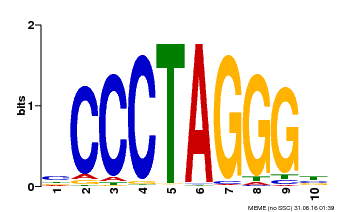
| UniProt | Transcription activator that binds DNA on 5'-ACTCTAC-3' and promotes auxin homeostasis-regulating gene expression (e.g. YUC genes), as well as genes affecting stamen development, cell expansion and timing of flowering. Synergistically with other SHI-related proteins, regulates gynoecium, stamen and leaf development in a dose-dependent manner, controlling apical-basal patterning. Promotes style and stigma formation, and influences vascular development during gynoecium development. May also have a role in the formation and/or maintenance of the shoot apical meristem (SAM). {ECO:0000269|PubMed:12361963, ECO:0000269|PubMed:16740145, ECO:0000269|PubMed:16740146, ECO:0000269|PubMed:18811619, ECO:0000269|PubMed:20154152, ECO:0000269|PubMed:22318676}. |
| UniProt | Transcription activator that binds DNA on 5'-ACTCTAC-3' and promotes auxin homeostasis-regulating gene expression (e.g. YUC genes), as well as genes affecting stamen development, cell expansion and timing of flowering. Synergistically with other SHI-related proteins, regulates gynoecium, stamen and leaf development in a dose-dependent manner, controlling apical-basal patterning. Promotes style and stigma formation, and influences vascular development during gynoecium development. May also have a role in the formation and/or maintenance of the shoot apical meristem (SAM). Suppressor of the gibberellin (GA) signal transduction. {ECO:0000269|PubMed:10368174, ECO:0000269|PubMed:11706176, ECO:0000269|PubMed:16740146}. |
| Regulation -- Description ? help
Back to Top |
| Source |
Description |
| UniProt | INDUCTION: Regulated by ESR1 and ESR2. {ECO:0000269|PubMed:21976484}. |
| Best hit in Arabidopsis thaliana ? help
Back to Top |
| Hit ID |
E-value |
Description |
| AT5G66350.1 | 2e-70 | Lateral root primordium (LRP) protein-related |
| Publications
? help Back to Top |
- Islam MA, et al.
Overexpression of the AtSHI gene in poinsettia, Euphorbia pulcherrima, results in compact plants.
PLoS ONE, 2013. 8(1): p. e53377
[PMID:23308204] - Pfannebecker KC,Lange M,Rupp O,Becker A
An Evolutionary Framework for Carpel Developmental Control Genes.
Mol. Biol. Evol., 2017. 34(2): p. 330-348
[PMID:28049761] - Estornell LH,Landberg K,Cierlik I,Sundberg E
SHI/STY Genes Affect Pre- and Post-meiotic Anther Processes in Auxin Sensing Domains in Arabidopsis.
Front Plant Sci, 2018. 9: p. 150
[PMID:29491878]
|